Friday, May 10, 2013

Recording: The Good Family

Artist: The Good Family

Songs: Outside Of Saskatoon + Same Old Song

Recorded at The Dakota Tavern, May 9, 2013.

The Good Family - Outside Of Saskatoon

The Good Family - Same Old Song

Full review to follow. Travis and Dallas Good of The Sadies have been celebrating their talented kin for quite awhile now. They started by bringing them on stage when playing their own headlining sets, but for a couple years, they've also been playing occasional shows as The Good Family, often without too much hype at the bottom of a bill. But now they've formalized the project with an album, and they decided to celebrate it with a two-night stand at The Dakota. Excellent musicians all, with eight members fitting onto the small stage, there were chances for everyone to take a turn singing a tune or two. In this pair of songs we get leads from Margaret and Bruce Good, Travis and Dallas' mom and dad. It was a knock-yer-socks-off hoedown, so hopefully as summer arises, we'll get some more chances to hear this family celebration.

Wednesday, May 8, 2013

Hot Docs 2013: Wrap-up

Wrap-up from from the 2013 Hot Docs Canadian International Documentary Festival, Toronto, Canada.

I don't have too much in the way of commentary. Celebrating its twentieth anniversary, this was another highly successful year for the festival. Screenings were often full-to-packed, and by my luck or the festival's curation, I think I saw a bit more good stuff this year than last. Having the bulk of the screenings at the Lightbox and Paramount generally makes for an enjoyable experience, making the ROM and Innis feel even shoddier by comparison. (Line-up gossip has hinted that the latter is now slated for a make-over, so here's hoping for some more comfortable seats!)

I saw fifty titles at this year's Hot Docs, putting everything in the pot. That includes features, mid-lengths and shorts; new films and old. (For bragging/comparative purposes, that works out to thirty-nine screenings.) Before the memories fade, here's a quick + rough ranking of everything I saw, with the first-listed getting the almost entirely uncoveted "Prix de Joe". As usual, my rankings don't overlap too much with the juried or populist award winners. (And note, of course, that I did write-ups for all of these, which you can find if you dig through the Hot Docs tag.)


Excellent

Let the Fire Burn
Valentine Road
This Ain't No Mouse Music!

Very Good

Salma
Julie: Old Time Tales of the Blue Ridge
The Blues Accordin' to Lightnin' Hopkins
Always for Pleasure
NCR: Not Criminally Responsible
Marc & Ann
The Maestro: King of the Cowboy Artists
Big Men
Caucus

Good

God Loves Uganda
15 Reasons to Live
A Well Spent Life
Gap-Toothed Women
Here One Day
Dry Wood
Seventeen
Petropolis
Leonardo
Hill of Pleasures
William and the Windmill
The Auctioneer
The Women and the Passenger
Vegas
River
Remote Area Medical
Picture of Light
Blood Relative
The Last Station
Bà nôi
12 O'Clock Boys
Searching for Bill
Anita
Live Cinema
Dear Valued Guests
Dizzy Gillespie
Cloudy Mountains
Unplugged

Decent

The Unbelievers
I Will Be Murdered
Eastern Avenue
The Life and Crimes of Doris Payne
Rent a Family Inc.
The Defector: Escape from North Korea
Terms And Conditions May Apply
Packing Up the Wagon

Duds

The Devil's Lair
Finding the Funk


Hot Docs 2013: Reviews #12

Reviews of screenings from the 2013 Hot Docs Canadian International Documentary Festival, Toronto, Canada.

Les Blank Program 3: Pleasures

(Dir: Sean McAllister, 69 minutes, UK)

The final set of selections in the Outstanding Achievement Award Retrospective were collected around the themes of "pleasures", and two of them did that by continuing to spotlight culture through food, song and ritual. Dry Wood (Dir: Les Blank, 1973, 37 minutes, USA) travels through Creole country to celebrate Mardi Gras with the rural African American population. Here we see some of the familiar traditions, like masks and costumes, in a simpler, more down-home version, but they still lead to a whoop-up party. Zydeco music abounds as we watch men and women performing their respective tasks in preparation for the feast (and warning to the squeamish: this involves slaughtering their dinner). With a big pot of gumbo and a joyful dance, one gets the sense here of Mardi Gras as part of a living, shared culture, and not as a tourism ploy.

You can see that commercialism starting to creep in a bit in Always for Pleasure (Dir: Les Blank, 1978, 58 minutes, USA), which immerses us into the grand Mardi Gras celebrations in New Orleans. Of course, from what we gather here, any occasion is worthy of a parade (including the unique Cajun/Irish fusion of NOLA's St. Paddy's Day!) and the residents do love a good party. Hanging out with The Wild Tchopitoulas (one of the many "Indian" tribes that take part in the celebration) we get to see the traditions, including the elaborate costumes that take over the streets. (Bury the Hatchet, whch screened at the festival a couple years ago borrowed some footage from this film and also showed how these traditions were enduring a generation later, before and after Katrina.)

Also on display here in all its glory is the music that soundtracks everything, and we hear Professor Longhair and others saturating the city. The film is as cluttered and vibrant as the celebrations, but they never feel claustrophobic or less than welcoming. A pretty powerful cultural artifact.

Gap-Toothed Women (Dir: Les Blank/Maureen Gosling/Chris Simon/Susan Kell, 1987, 31 minutes, USA) was the exception here in terms of form and content. More interview-based than Blank's usual style, this still demonstrated his whimsical worldview in choosing to focus on something that most of us might not think twice about. As it turns out, however, gap-toothed women have long been a topic of consideration — it was a codeword for promiscuousness ever since Chaucer's tale of the gap-toothed Wife of Bath ("The remedies of love she knew, perchance"). We then meet a series of gap-toothed women (including Lauren Hutton), each who have found their own way to love their "gap". Warm and witty throughout, this tackles topics like beauty standards and self-acceptance without losing its charm.

The Unbelievers (Dir: The Unbelievers, 76 minutes, USA)

A glib and glossy documentation of a book tour, where we see celebrity authors being flown from city to city to address throngs of adoring fans. With that rock'n'roll iconography, this film can never quite get past the merely superficial as it follows Lawrence Krauss and Richard Dawkins around. Advocating for science and reason has put religion in each of their crosshairs, and while this is an essential debate in a world sliding into "truthiness" as a political cognitive check and "faith-based" governance, this film is more of a preaching-to-the-choir victory lap than the slogging work of challenging their viewpoints' opponents. (And as to the tricky problem of selling reason to irrationalists, the film is largely silent.)

It's a bit more successful (though still superficial) as a character sketch of its protagonists, giving us a bit of a feel for Dawkins and Krauss as prototypical American and British academics (stiff upper lip formality vs. slightly-slouchy sneaker-wearing casualness, respectively). It also tantalizingly hints at how each of their academic disciplines (Dawkins' evolutionary biology and Krauss' theoretical physics) informed their worldview and their need to publicly joust with their opponents, but it's done mostly in a way to appeal to people who have already read their books.

While I'm entirely sympathetic to everything they raise, in the end the film is a bit of a paradox: a smug aren't-we-clever back-patting session about people whose intellectual stance says we should be constantly challenging received wisdom. Given how strongly these issues need to be confronted (see below), something more is required.

God Loves Uganda (Dir: Roger Ross Williams, 83 minutes, USA)

In Uganda, it is far from socially acceptable to be gay — and efforts are underway to push that further into outright illegality, a crime punishable by death. This film examines how attitudes towards gays and lesbians in Uganda have been shaped by so-called Christians, tracing the path back to radical fundamentalist churches in the United States. Going inside a bizarre sect known as the "International House of Prayer" — one of many American churches involved in missionary activity in Uganda — we see the fervour put into exporting a puritanical political ideology that would be unviable (if not veering on criminally hateful) in their home country.

Along the way, we meet such figures as the cheerful theocrat Lou Engle (previously seen in Jesus Camp), who delivers his judgmental Old Testament views with a smile and a chuckle, as well as Reverend Kapya Kaoma, a refugee from Uganda now in America after trying to preach against the rising ride of homophobia. We also spend time on the ground in Uganda with various Americans spreading their version of the "good news", from the terrifying fringe extremist Scott Lively to a team of fresh-faced young missionaries. And though it's all cloaked in layers of plausible deniability, we see the connections and how this filters down to Ugandan preachers who are fomenting unadulterated hate among their flocks. In a country with a massive demographic imbalance tilting to the young, what's being taught now could well linger for generations.

We see how this works out "on the ground" in meeting gay activist David Kato (who would be murdered) and Bishop Christopher Senyonjo (who would be excommunicated). This part of the story was more fully addressed in last year's excellent Call Me Kuchu, which approached these issues more closely from Kato's point of view. That powerful film was more emotionally devastating, but foregrounding the role of the American fundamentalists is a valuable service as well.

The film's greatest weakness, however, is how these instruments of control are not called by their proper name: colonialism. The fact that this word is not used during this documentary implies there might be something of a blind spot in its American creators. That said, the film also has to be applauded for its admirable even-handedness — it shows both sides involved with this issue and largely lets us draw our own conclusions. A viewer sympathetic to the fundamentalist worldview could conceivably find much to like here, as the Christians are allowed to speak for themselves as we see them at their work. For the rest of us, it's a call to arms and a reminder that the quest for fundamental human rights and equality is nowhere near complete.

Tuesday, May 7, 2013

Hot Docs 2013: Reviews #11

Reviews of screenings from the 2013 Hot Docs Canadian International Documentary Festival, Toronto, Canada.

Here One Day (Dir: Kathy Leichter, 76 minutes, USA)

Near the outset of this intensely-personal documentary, we see director Kathy Leichter staring pensively out a window for a lingering moment. And I tensed up, thinking to myself this was going to be one of those sorts of movies, filled with heavy-handed symbolism.

But I was wrong. Rather than some sort of metaphor for absence or mourning, that window held a very real meaning, for it was the one from which her mother Nina jumped to her death. Immediately after that moment of reflection, Leichter told her father, cooking dinner at the stove beside the window, that it was finally time to replace it. The rest of the movie is about the process that allows that sort of letting go and moving on.

After her mother's suicide, Leichter took over the family's New York City apartment — partially to remain close to some part of her. And for the years after that, some of her mother's possessions lingered in closets and other crannies, too painful to part with or even to go through. It was finally the demands of her own growing family that led her to realize it was time to part ways with those traces. Noteworthy among them were a series of audio recordings that her mother made, often while at the crests and troughs of her manic-depressive cycle.

And so Leichter set out to document her search for closure, while allowing for the presence of her mother to remain as much as possible. As we learn the family's backstory, Nina's voice imparts some of her personality. Although coping with depression, she was a poet and a free-spirited activist who spoke with a true New Yorker's sardonic edge. We hear her talk about her prescriptions and self-evaluations, as well as her frustrations with her husband Franz, a state senator, as she chose to subordinate her own ambitions to the needs of her family. We also hear her struggling with her own realization that her condition is worsening, but it all seems under control — until it isn't.

We also spend time with Franz, as well as Kathy's brother, spending time to dig back and untangle the aftermath. Complicated relationships (as pretty much any family is) were stretched in new ways by Nina's death, and even sixteen years later, we can see the raw edges in some of their exchanges. But at the end, cleaning out the closets seems to be healthy for everyone, and as the film closes, we see the window being replaced.

Honest and forthright, there were heavy moments throughout, but in not flinching at the memory of her mother, Leichter crafts a resonant story, with strands recognizable to any family that has dealt with mourning and loss (as pretty much any family does).

Seventeen (Dir: Joel DeMott/Jeff Kreines, 1985, 118 minutes, USA)

Screening in the festival's retrospective "Redux" program, Seventeen intrigues on several levels. Originally commissioned by PBS as part of a larger documentary series called Middletown, it's perhaps unsurprising that this verité portrait of high-school seniors in Muncie, Indiana was deemed unsuitable for the American airwaves. Even in this age of omnipresent oversharing and teens-behaving-badly, it manages to feel unusually raw and intense.

Although we encounter a variety of subjects, the film's main character is Lynn, who faces her teachers with foul-mouthed indifference, far more concerned about scoring pot, hanging out with her boyfriend and arguing with her parents. The camera never really pulls back to examine the wider world, but the Reagean-esque shadow of deindustrialization and looming nuclear apocalypse feels ever present — what the fuck is there to grow up for? Even Lynn's parents seem to be disillusioned, waiting for the weekend's party as much as her. "Issues" are omnipresent, but the inter-racial relationships (and the racist reactions they provoke), teen pregnancy, drinking and drug abuse never feel like moments from a "very special episode" — they're simply instances of day-to-day shittiness to be dealt with or avoided.

The time-capsule graininess of the images (which alone make this worth watching for those who want an unfiltered burst of the analog 80's) leave them begging to be "read" in certain ways. Even as we can feel the turbulent emotions provoked by, say, one teen's friend being killed in a car wreck, the cathartic beer guzzling and shirtless weeping when the radio plays his request for "Against the Wind" also registers at the level of trashy camp. And similarly, as I watched Lynn break pretty much every rule she came up against, I kept waiting for a Jason/Michael/Freddy-esque slasher figure to arise from the shadows to give her her moral comeuppance. I suppose ultimately, the only real punishment that these teens had to face was the prospect of living the rest of their lives. That ultimate bit of "reality" stinging underneath everything trumps the campy resonances and is what made this a memorable experience.

Finding the Funk (Dir: Nelson George, 78 minutes, USA)

I tend to avoid the music docs at the festival, not only because I tend to get a lot of music every other week of the year, but also because it's hard to tell which ones will be mere gussied-up puff pieces. This doc would serve as a validation of that wariness. Featuring a glib, soulless superficiality befitting something commissioned by VH-1, this is not a comprehensive overview of the funk genre so much as the most complete story that could be wrangled out of the footage the filmmakers assembled.

Whether it was a deliberate choice or a constraint in attaining the rights, there was a paucity of archival performance or interview footage (save for some interview fragments with an amusingly incomprehensible James Brown), so the film was forced to rely on older, mumbly versions of the story's heros. Contemporary interviews with George Clinton and Sly Stone are front and centre here and while they're fascinating in their own way (especially seeing the long-reclusive Stone), they do little to get across how powerful their music is. (Bootsy Collins, on the other hand, remains amusingly expressive.)

And sadly, the music isn't here to do the talking for them. Sometimes we'd get a snippet of it as played by their acolytes reproducing it (on bass, drums, or guitar) to demonstrate their innovations, but while that wasn't totally uninteresting in its own way, it does little to present the power of the original recordings. But hey! We can always cut to D'Angelo to see what he thinks! (The segment on Prince was especially barren and patched together and felt enormously incomplete, getting no closer to him or his music than an interview with one of his tour managers telling us how good he was.)

Ultimately, this will take its place as filler in the thousand-channel universe, something that you'll linger on for a moment while flipping channels and be vaguely entertained by until the next commercial break. This film couldn't render its topic totally uninteresting, but it's just nowhere as special as it could have been. Overall, you'd be better off to just pull out your records and shake your booty.

Anita (Dir: Freida Mock, 84 minutes, USA)

This film believes Anita Hill. While some documentaries work to present the complicated lives and milieus of their subjects, this is more of a celebration of the life's work of the Oklahoma law professor that created a stir when called to testify at the American Senate confirmation hearings for Supreme Court nominee Clarence Thomas.

"Sexual harassment" was less talked about in 1991, and the hostile grilling that Thomas faced ("are you a scorned woman?") created the lingering cultural impression that she was on some manner of crusade or that her credibility was on trial instead of the fact that the was a subpoenaed witness. That testimony would alter the trajectory of her life, pushing her from an obscure career teaching contract law onto the path of becoming an activist. Presented here as a sort of sacrifice who helped bring a cultural change and open a new conversational space, we can get some sense of how far we have come on these issues in the last twenty years, and how much work there is to be done.

These are hugely important issues, and the work that Hill has done should be celebrated. And while this was a well-assembled and reasonably interesting documentary, I must confess, however, that some contrarian urge in me rendered it less celebratory than it wants to present itself. Preaching to the converted, which seems to be this film's fate, isn't particularly good at challenging assumptions. I suppose anything that veers this close to hagiography leaves me with a mildly hinky feeling, even when it's something I'm sympathetic to.

Monday, May 6, 2013

Hot Docs 2013: Reviews #10

Reviews of screenings from the 2013 Hot Docs Canadian International Documentary Festival, Toronto, Canada.

The Women and the Passenger (Dir: Patricia Correa/Valentina Mac-Pherson, 45 minutes, Chile)

The "Passengers" in this film are the clients of a Chilean hotel that specializes as a rendezvous for illicit encounters, and the women are the employees who clean the rooms and serve the clientele. Filled with a variety of themed suites, this is the sort of hotel that rents rooms by the hour — but it's also classy enough to be diligent about cleaning them up after. And so, we follow a trio of the cleaners on the duties, as they make up the beds and wipe off the stripper poles.

A few low-angle shots of passing feet give us a slight taste of the "passengers", but the focus is squarely on the employees, who offer to the camera their frank thoughts on love and sex (one of the more uninhibited cleaners shows an unbridled curiosity about one room's complicated sex chair). Some see what's going on around them as cautionary tales, and some as instructional opportunities to spice up their own relationships. Cutting across fundamental categories of work and love that affect us to the core, this achieves a wise and witty sense of intimacy with its subjects.

Screens with: Dear Valued Guests (Dir: Jarred Alterman/Paul Sturtz, 15 minutes, USA), another hotel-themed piece. Focusing on the last days of The Regency Motel in Columbia, Missouri, this short features some elegant shots of the hotel, barren of guests as anything valuable is being stripped away. That evokes a sense of melancholy and emptiness, while interviews with some of the staff (and the hotel's lone permanent resident) arouse a sense of nostalgia. A troupe of artists is allowed to take over one the hotel's floors before it's torn down, and they transform the space with vibrant installations and throw one last party before the wrecking ball arrives. Life's entropic transience will always forestall permanence, but memories — including this engaging film — will remain.

This Ain't No Mouse Music! (Dir: Chris Simon/Maureen Gosling, 92 minutes, USA)

I tend to avoid the music docs at the festival, not only because I tend to get a lot of music every other week of the year, but also because it's hard to tell which ones will be mere gussied-up puff pieces. That's probably why I'd originally passed by this in the listings with hardly a second thought. But after I encountered Chris Simon and Maureen Gosling holding a warm and engaging Q+A after the first set of Les Blank shorts, I was clawing for my schedule when they mentioned they also had a film of their own at the festival.

Both of them worked with Blank for many years, and it's no surprise that some of his joy and close engagement carried over to this project. The links go deeper as well, as subject Chris Strachwitz also collaborated with Blank of several of his music-themed documentaries. Those films would provide some of the archival material filling in the background, but most of what we have here is a contemporary overview of a striking individual.

Strachwitz is the founder of Arhoolie Records, which has specialized for fifty years in recording and presenting "down home" music in many styles, from Appalachian old-timey music to Cajun to Tejano. Starting with a backroads Texas trip to find bluesman Mance Lipscomb, Strachwitz has specialized in recording musicians in situ, cutting albums in living rooms and back porches, eschewing studio perfection for that in-the-moment spark. In so doing, he's preserved vast swathes of America's regional cultures.

His immigrant roots gave him an outsider's view to see the value in the culture that takes place off the main drags, and the film tracks his story and gives us a sense of Strachwitz's personality and quirks, right from the title on down. (He uses "mouse music" dismissively, in the same way you might call something "Mickey Mouse" — a catch-all for everything that's chintzy and ersatz.)

And so the film is a celebration of both the communities that make this music possible as well as how one exceptional individual can play a key role in spreading it to the wider world. In so doing, it presents the audience with an immense sense of joy. I dug the film for my own reasons, feeling good to think that one person with a recorder could be doing something important, but this was received with the loudest and most enthusiastic applause of anything I saw at the festival, so I think I can say the sense of uplift hit everyone. I assume that this will be making it back into theatres somewhere down the line, and it gets a highest recommendation.

Blood Relative (Dir: Nimisha Mukerji, 73 minutes, Canada)

Thalassemia may not by well-known on this side of the planet, but the world's most common genetic disease affects thousands of children wordwide. Sufferers require frequent blood transfusions to survive, but those transfusions also cause iron buildup in the body. Without chelation treatment, the iron will first stunt growth and ultimately be fatal. The disease is widespread in India, where treatment can be prohibitively expensive.

This film introduces us to some sufferers, including Imran, a gregarious Eminem fan who at twenty-four looks a decade younger. He is working to pay for his treatments and support his family, but is in a precarious position when his health begins to worsen. We also meet Divya, whose family has been unable to afford chelation therapy — and who believe that faith healers might be a better option.

Watching over them and many other sufferers is Vinay Shetty, a dedicated activist who works at an NGO to help provide care for those with Thalassemia. He labours night and day to find donors to pay for treatments while also lobbying the government for a long-term solution. Several times we see him bump up against ingrained cultural attitudes that would wear down a lesser man, but he always seems to be able to dig deeper to find more energy and fight on.

Mukerji's film is an admirably unfussy presentation that never resorts to easy sentimentality to manipulate the audience's emotions, instead showing us how this is a complicated problem both at the individual and societal level. In the end, it's the dignity and perseverance we see from the sufferers and from Shetty that register, and the hints that things are slowly improving that provide some optimism.

Les Blank Program 2: Well Spent Lives

Usually the celebration of an artist's body of work, this year's Outstanding Achievement Award Retrospective was given a sombre cast with Les Blank's recent passing. However, given the recurrent themes of celebration, gentleness and the good things in life, his body of work almost insists that we keep our spirits up — and here shows us some examples of other lives worth celebrating.

An offshoot of the tribute to Appalachian culture Sprout Wings and Fly, Julie: Old Time Tales of the Blue Ridge (Dir: Les Blank, 1991, 11 minutes, USA) is a character sketch of Julie Lyon, who remains feisty and lively at eighty years of age. Still willing to sing a song or hop up for a dance, she's as sharp as a tack as she shares her vivid memories. Keeping the camera close enough to catch the twinkle in her eye, this is a wonderful testament to a long and happy life.

Marc & Ann (Dir: Les Blank, 1991, 27 minutes, USA) takes us back to a happy couple at an earlier stage of their lives, building a family on a farm filled with happiness, good food and good music. Marc and Ann Savoy are both dedicated to preserving the Cajun cultural traditions, through formal means (Marc builds accordions the old fashioned way; Ann has written a book about Cajun music) but also through their lived daily experience. They're not reactionaries trying to turn back the clock, but they see the value of the old ways — and their bounteous lives seem to show that they're on to something. It's also a captivating love story and a successful account of passing family traditions along. (In fact, their son Wilson can be seen carrying the torch a generation later in This Ain't No Mouse Music.)

Returning to the same Texas terrain as the first programme's sketch of Lightnin' Hopkins, A Well Spent Life (Dir: Les Blank, 1971, 44 minutes, USA) gives us a portrait of Mance Liscomb. The bluesman was unrecorded until "discovered" by Chris Strachwitz at age sixty-five but has since become a member of the pantheon. A sharecropper for most of his years, Liscomb has lived some hard times, but with his wife at his side, he seems more grateful than worn-down. A much less incendiary presence than Hopkins, he's reflective as he looks back, dispensing advice on life and love — but he could still play a mean guitar. This is the sort of portrait that makes one want to head from the theatre to the record store to grab some of his stuff.

Sunday, May 5, 2013

Recording: The Highest Order

Artist: The Highest Order

Songs: Widow + Hurry On Sundown (feat. Calvin Brown & Richard Gibson) [Hawkwind cover]

Recorded at The Horseshoe Tavern, May 4, 2013.

The Highest Order - Widow

The Highest Order - Hurry On Sundown

Full review to follow. Celebrating the release of their awesome debut album If It's Real, The Highest Order played one set composed mostly of its songs, and then a second with a series of guests joining them on some covers. Here's one taste from each set, the latter with extra guitars from half of rock action unit B-17.

Recording: Milk Lines

Artist: Milk Lines

Song: Suicide Note

Recorded at The Horseshoe Tavern, May 4, 2013.

Milk Lines - Suicide Note

Full review to follow. I'm not familiar with frontman Jeff Clarke's other projects (Demons Claws, Hell Shovel), but this sounded a bit like early Uncle Tupelo putting the Long Ryders in a headlock at a poolhall in the bad part of town.

Recording: Comet Control

Artist: Comet Control

Song: Ultra Bright

Recorded at The Horseshoe Tavern, May 4, 2013.

Comet Control - Ultra Bright

Full review to follow. Sneaking in an early set to a fairly quiet room, Chad Ross introduced his new post-Quest For Fire Unit. It included faces old and new and musically wouldn't be considered a radical departure from his earlier work, although the tempos were generally speedier than the sludgier tendencies of QFF (or his solo Nordic Nomadic incarnation).

Saturday, May 4, 2013

Hot Docs 2013: Reviews #9

Reviews of screenings from the 2013 Hot Docs Canadian International Documentary Festival, Toronto, Canada.

The Last Station (Dir: Catalina Vergara/Cristian Soto, 90 minutes, Chile/Germany)

This patiently-observant view of life in a Chilean nursing home attempts to relate the loneliness and emptiness that the residents face on a daily basis — but also the simple beauty that can be found at any stage of life. As the film opens and we see a new resident being dropped off, we get a feeling for the immeasurable space between people, a gulf that doesn't narrow even in the final years. Throughout, we see how faith functions in the constant presence of death — but also the small ways that the residents rage against the dying of the light.

The visual compositions are sometimes quite wilfully dim, which might be for poetic effect but is often simply annoying. Featuring long, wide shots from an unmoving camera, its pace is as measured as that of the home's residents — everything moves in that slow, shuffle-along way. It's all lentamente enough that a shot of a snail inching its way up a tree fits right in.

Many of the scenes are wordless as we observe the residents go about their days. One man works his way through his address book, finding which phone numbers haven't been disconnected yet. Another has a penchant for slowly dragging a chair across the yard so he can slowly and meticulously gather up all the fallen leaves on the lawn. A third clacks away at a typewriter, one letter at a time.

We also catch occasional glimpses of children at play in the schoolyard next door, one of several rather obvious metaphors that get tossed around here. In other scenes, we see old trees being pruned and felled and new ones being planted.

There are some striking similarities to La Belle Visite, a similarly measured look at life in a Gaspé nursing home, which played Hot Docs in 2010. The key difference here (and the film's main throughline, inasmuch as it has one) is Father Hurtado, who serves as the voice of the residence's "radio" station, making death announcements and occasionally railing against families that leave their relatives to languish here alone. ("Do they lose us here, or do they throw us away?")

But he also works to transport the residents away, at least in their imaginations, as he plays them field recordings of nature scenes: wind through leaves, waves on a shoreline. A few times we cut from him playing his recordings to see him making them, and it gives a sense of how powerfully transporting they could be. It also sets up the film's final shot, a beautiful image that's so powerful, it almost overpowers the accumulated misery with a blast of pure bliss.

It's hard to say if the film is a success or a failure — there's a fine line between "still" and "dull", and this is shuffling along that boundary all along. In theory, this should work for anyone prepared to embrace its stillness, but it can still test an audience's patience — I was pretty sure I knew what I was getting myself into here, but I still found it to drag in places.

The Devil’s Lair (Dir: Riaan Hendricks, 86 minutes, South Africa)

At the broadest level, this is a story about a guy tring to achieve work-life balance in the Cape Flats outside of Cape Town, South Africa. The "work" here, however, is on the other side of the law, and we observe Braaim in his dual roles of doting paterfamilias and ruthless gang leader.

Membership in the small NTK gang (which can stand for "Nice Time Kids" or "Nice to Kill" as required) is a heavy commitment, as we learn from Braaim as we watch him initiate (and tattoo) a new member. Trafficking in meth, heroin and mandraax, Braaim is not a hands-off manager, and we see him cutting product for distribution as well as entertaining "clients". (NTK, it appears, does not follow that old gang rule about not getting high on your own supply.)

We get a sense of the power dynamics at play in Braaim's gang — and more fascinatingly, at home, where his wife constantly frets over whether she should remain, and is not entirely supportive when Braaim is wounded in a shootout. If the film's purpose is to show that gang life is more tawdry and dull than glamourous, that's certainly achieved here. For a film with scenes of drug-taking and killings being planned, it's actually pretty quiet and banal. Despite all the big talk, it doesn't seem like a lot actually happens, and the lack of action is beefed-up with an over-the-top "here's what to feel" musical score.

We stick so closely to the film's main locations that we don't really get any sort of feel of the dangerous life in the Cape Flats. We are told that it has one of the highest murder rates in the world, but all we really see of it is a couple shots of empty streets. Although there's an amazing amount of trust and access here, it's so contained that it feels like a two-set play, alternating between "home" and "work". For all the potential strengths here, this is surprisingly unengaging. Not recommended.

Picture of Light (Dir: Peter Mettler, 1994, 83 minutes, Canada)

One of his more popular films closed out the "Focus On Peter Mettler" retrospective to a full house. This film is a celebration of the North's beauty in several forms, from the sculpted elegance of snowdrifts and powerful white-out blizzard winds to the mysterious Northern Lights. Those are the cause of the journey, after a challenge is made to try and capture their illusive beauty. Alternating between a scientific quest and a poetic one, this film presents some of Mettler's ongoing metaphysical concerns in a fairly approachable manner.

An excursion to the space shuttle (which is also observing the aurora) fills in the factual background, but also serves as a metaphor for the distance required to get to Churchill, Manitoba as we see the train hurling through the void, only the single track laid out before it, NASA control chattering away in the background. That's one unusual overlapping we get on this trip north in the shadow of the first Gulf War. (That would be another of a few real-world interruptions that nudge their way into the frame.)

Waiting around for the right weather to film the aurora, there is time for a few tangents. We hear some stories from the townsfolk, including the lore of the northern lights, and as boredom sets in, we get a few other whimsical diversions. Poised at the border between civilization and the "true north", we see some uncanny images in the infinite drifting snow plains, including a ghostly rusted-out ship, imprisoned in ice and long abandoned.

Mettler's narration shifts everything into the realm of mythopoetic razzmatazz, and as the film inches along, it slowly feels out its themes. Key among those is a constant meditation on the act of mediation — how is a recorded artifact different than seeing something in person? Here, that gap is enhanced, as the auroras (recorded with long-exposure cameras) are rarely shown in "real time".

The technical efforts pay off and we are presented with the results: night-long shots compressed into seconds, the stars moving in their stately arcs as the luminescent gauze curtains of the northern lights dance in front of them. No words are required here, and Mettler is wisely silent as the pictures hint at some powerful truth that he cannot encapsulate.

And in the end, we are left with those lingering beautiful images — and for anyone who has seen the northern lights in person, a sharpened sense of their uncapturability, as this is still only a small fraction of what it's like to really see them.

Friday, May 3, 2013

Contest: The Charge of the Expormidable Moose

The Charge of the Expormidable Moose

Tarragon Theatre Extra Space. May 10-26, 2013

The language gap probably has something to do with it, but a lot of people in English-speaking Canada know very little about les Automatistes, art-world rabble-rousers whose work prefigured (and to some extent helped provoke) the Quiet Revolution.

To the extent they are known, it's usually in association with the painters who dominated the group, especially founder Paul-Émile Borduas and Jean-Paul Riopelle. They also produced Refus Globale ("Total Refusal"), a radical manifesto that brought them to infamy. It's less-widely noted, but the artists in the group were not just painters and included playwright Claude Gauvreau.

La charge de l'orignal épormyable, generally considered to be his masterpiece, has never been performed in English. Until now. Local troupe One Little Goat (billing themselves as "North America's only theatre company devoted to contemporary poetic theatre") is tackling the play (which "revolves around a poet who is mocked and envied by his fellow housemates – or are they fellow inmates?") for an upcoming run. This is a rare opportunity to get an inside view of an important part of Québecois culture — and find out just what an Expormidable Moose is.

TICKETS + MORE INFO

There are fifteen performances (including Sunday matinées) in the Tarragon Extra Space (30 Bridgman Avenue Toronto). Tickets are $25 ($20 for students/seniors/artists and there are some Friday and Sunday rush tickets for $13). You can grab them online (with no service fees!) here.

CONTEST

Courtesy of One Little Goat, I have a pair of tickets to give away! They are good for any performance apart from opening night and the closing weekend.

To enter, shoot me an email to mechanicalforestsound@gmail.com, with "Moose" in the title and your name in the body. I'll randomly draw a winner at the end of Thursday, May 9th.

Hot Docs 2013: Reviews #8

Reviews of screenings from the 2013 Hot Docs Canadian International Documentary Festival, Toronto, Canada.

River (Dir: Bill Ross, 180 minutes, USA)

[Being a somewhat sprawling account of an unconventional narrative concerning a journey down the mighty Mississippi River]

This is not, really, a documentary. Which is to say that though it relates a story, it's more of a big amalgamation of footage that sprawls beyond a tightly-constructed narrative. There might be a decent standard-length feature here, one that winnows this down into something more streamlined and takes more care to, say, introduce and distinguish the characters (the brothers Bill, Turner, and Alex Ross plus lifelong friend Kyle Rouse) instead of just dropping us in amongst them.

Perhaps we should say that this is more of a "mere" travelogue than a documentary given how it doesn't develop themes of the journey standing for something greater than itself.1 But when you use a river as a central motif you might as well slap a banner across it reading "INSERT METAPHOR HERE".2 And in this case, it's pretty obvious that there's a link between form and content here, as if the only way to tell a story about America's largest river system is through a film every bit as wild, untamed, and prone to twisting around as it is.

And though this is not a documentary, it was made by skilled documentarians, which does elevate things. Known for the geographical explorations of 45365 and Tchoupitoulas, even if the brothers Ross are slumming it a bit here there is obvious craft lurking around the edges of the frame.3 Shot mostly from tripod, there's both stately, objective removed distance in the images.

Originally released as a series of online videos, this was described as perhaps a one-time-only full-length showing on the the big screen.4 It certainly made for a slightly surreal experience. The cast and their friends were all grouped together in the theatre's front row. I could make out their silhouettes and occasionally hear them pass a comment back and forth5 and I was briefly wondering if they were going to go all MST3K on their own film — how meta would that be? I was sitting on an aisle, and as one of them or another would occasionally pass by me heading out for a break from the film I had to restrain myself from raising my arm for a high five. Perhaps I was remiss in not doing so.

This film is the story of the houseboat Rosemarie, a shack on pontoons that looked barely seaworthy but was the vessel for a voyage from their native Ohio down the entire length of the Mississippi River, taking its crew out for the sort of trip that maybe everyone should take when they're old enough to be adequately responsible to pull it off but still too young to know better.

Without much leadup, we're thrown us right into the thick of things with the craft's launch, and the first hour is perhaps the least artful here as the audience is basically tossed in the river to sink or swim. It takes a little while for the characters to gain some definition and for the film's episodic rhythm to find itself.

One way it does is in the manner in which it's filled from top to bottom with songs. Amongst the memorable music moments: an impromptu "Psycho Killer" sing-off; electro-funkin' to "Oh Sheila" while tearing down the river; a truly insane version of "House of the Rising Sun" on one trip to shore; and a defiant karaoke run through "I Won't Back Down".

The film's other great strength came from the excursions ashore to meet the various locals. I think it was when the crew fled from townies who were a bit too eager to offer an intimate safe harbour, turning off the lights and battening the hatches against the feminine calls of "anyone home?" that I was finally well and truly on board with the whole thing.

"People on the river are happy to give," as the song says and we meet a variety of folks who pitch in in one way or another out of kindness, boredom, or a sense that this is simply the sort of adventure that they wish they were themselves on.

Maybe it's because of that that the journey doesn't lose momentum when the growing size and unpredictable power of the river takes its inevitable toll and tears the engine from the boat. A subsequent landlocked hitch-hiking leg gives us more encounters with helpful strangers and some of the best comedic sequences in the whole piece. Structurally, that also gives the piece a low point of worn-out exhaustion and a bit of a sense of achievement when they still manage, once again through the kindness of strangers, to paddle into New Orleans.

Although (as mentioned above) I was dubious for the first chunk of this, it rather won me over by the end. A somewhat audacious programming choice for Hot Docs, it was certainly a unique viewing experience. So much so that one thinks it might have been treated a bit less like a regular screening: a venue with a bar serving all the way through would have been a real boon here, and it should have been held in a venue that could simply have been converted into an instant after-party (preferably with karaoke).6

Given its episodic design, it's not too surprising that there were some parts that engaged more than others. Or, as we're told after one of a series near-maritime disasters: "it's not always a good time, but it's always an adventure."


1 Contra to, say, Ross McElwee's Sherman's March.

2 I was trying to come up with some sort of "Heraclitus and Mark Twain walked into a bar" joke to go here, but nothing really worked out.

3 Although Bill and Turner Ross are generally jointly credited on their proper documentaries, Bill gets a solo credit on this one.

4 Besides the ungainly bulk of the complete film, I'm guessing wider distribution of the whole thing might be curtailed by the rebroadcast, retransmission, or account of baseball games without the express written consent of Major League Baseball, as well as the veritable rivers of presumably uncleared music.

5 The first time the life-sized cardboard cutout of Charles Barkley that was taped to the side of the boat made an appearance on-screen, it was loudly greeted from the audience by one of the boat's crew.

6 This might also have helped to bring the right audience out for this: there were a lot of people who clearly didn't do their due diligence into the length and origin of this, and a lot of people bailed as it went on.

Thursday, May 2, 2013

Hot Docs 2013: Reviews #7

Reviews of screenings from the 2013 Hot Docs Canadian International Documentary Festival, Toronto, Canada.

Les Blank Program 1: Maestros

Usually the celebration of an artist's body of work, this year's Outstanding Achievement Award Retrospective was given a sombre cast with Les Blank's recent passing. However, given the recurrent themes of celebration, gentleness and the good things in life, his body of work almost insists that we keep our spirits up. This first of three sets of shorter works was grouped around artists, but also served as an overview of several other themes running through his work. The screening was also enlivened by the presence of Chris Simon and Maureen Gosling (who both worked with Blank for many years, and here with their own new film) for a Q+A session.

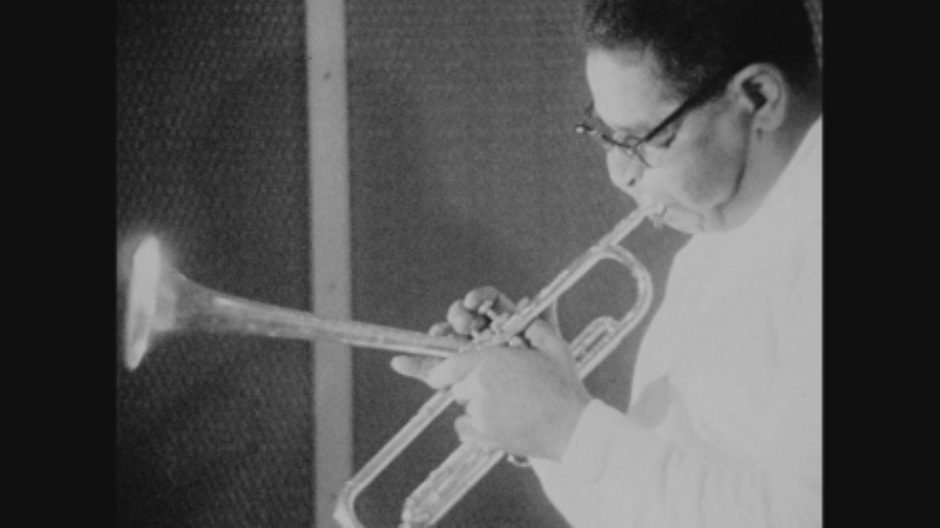
Dizzy Gillespie (Dir: Les Blank, 1964, 20 minutes, USA) started as a work-for-hire and felt somewhat caught between Blank's emerging approach and a more textbook 60's "direct cinema" feel. But the sense of joy radiating from its subject still stood out. Although there were some moments of biographical discussion, this was mostly a portrait of Gillespie as both serious working artist (going through charts with a large jazz orchestra he would guest soloing with) and goofy entertainer (hamming it up onstage with his own quintet). There's enough time to hear plenty of deliciously speedy bop runs while taking in the cosmopolitan vibe of the big city jazz scene, featuring integrated crowds and bands.

That'd be a marked counterpoint to the segregation seen (but not specifically commented on) in The Blues Accordin' to Lightnin' Hopkins (Dir: Les Blank, 1968, 31 minutes, USA), nor would it be in the lists of reasons to have the blues that Hopkins would reel off. (Of course, he might have been more immediately worried about the gun-totin' in-laws lingering outside the door, as Blank alluded to in his entertaining notes on the film's making.) At any rate, this felt like a stylistic leap forward. A new generation of more portable film equipment gives us vibrant colour images and a sense of freedom as we follow Hopkins around some dusty country backroads. As "country" as the Gillespie film was "city" we see features of rural African-American culture (including a rodeo!) that are less often examined. And meanwhile, from behind his omnipresent shades and flashy gold teeth, we hear Hopkins expound upon the blues — and after a pull from his ass-pocket o' whisky — we get it distilled into music. A wonderful portrait of a canny improvising artist.

The last and longest of the three films in this program, The Maestro: King of the Cowboy Artists (Dir: Les Blank, 1994, 54 minutes, USA) focused on someone with no less of an artistic impulse, but with far less renown. Gerry Gaxiola decided to up and quit his job and become an artist, adopting the persona of one of the singing cowboys of the b-movies he loved as a youth. "Passion brings its own talent," he declares as we see him working in seemingly all media — we see him paint and sculpt, sing songs, as well as designing his own cowboy boots and sequined shirts. Choosing his own path might not be financially lucrative (he refuses to sell his art) but it brings immense satisfaction and a seemingly bottomless reserve of energy. Whether putting together day-long pageants or gallery shows, Gaxiola's life-as-art-as-life shows how radical and all-encompassing the DIY stance can be. As it follows him around making art (and issuing challenges to the art establishment) the film manages to transmit his constantly surprising joy and spirit.

12 O'Clock Boys (Dir: Lotfy Nathan, 76 minutes, USA)

Positivity can be hard to find on the notoriously hard-luck streets of Baltimore, so one can understand the embrace of anything that gives a sense of release. One burgeoning subculture revolves around stunt-riding dirtbikers, and in Nathan's film we follow young Pug, who'd give anything to be able to join their ranks. Dubbed the "12 O'Clock Boys" for the erect pose they strike when popping a wheelie, this sport is tailor-made for youtube, where riders can record and share their audacious, death-defying tricks.

Coming from a broken home (and having recently lost his beloved elder brother) Pug is bright and curious when it comes to animals and dirtbikes, but seems otherwise bound for trouble. Immersed in the harsh machismo of the streets, as he watch him grow over a span of three years we see him harden as he works to get his own bike and practice so he can ride with the pack.

But while there's a compelling character at the core of this story, the film is hard to like. Mostly because, even though we can see why people would be drawn to this lifestyle ("They're free," Pug simply says at one point when he watches the dirtbikers) it's still hard to garner much sympathy for such these miscreants. The rides take place at great risk not only to the bikers (helmets are uncool) but to the public at large, as they zip through traffic without regard to the safety of other motorists and pedestrians, tearing up parks with their wheels and blasting their loud engines. As their energy is put to work trying to outfox the police (who are under orders not to engage them in high-speed chases) it just seems like so much displacement of skills that could be put to better use. Others' mileage may vary, but all of that made it really hard for me to enter into the movie's headspace.

Remaining screenings: Saturday, May 4, 9:30 PM @ TIFF Lightbox 2

I Will Be Murdered (Dir: Justin Webster, 88 minutes, Spain)

A fascinating story somewhat frustratingly told. The title gives away the first twist here: Guatemalan lawyer Rodrigo Rosenberg caused a sensation in the aftermath of his death when a message emerged in which he announced, "if you are watching this video, it's because I've been murdered by President Álvaro Colom." It's hard to say much more without having to issue a spoiler warning.

I shan't give the game away, but these two facts might be too suggestive for those who'd like to see this without clues: 1) even when they call themselves "non-political", the privileged classes in society are always acting in their self-interest and, 2) we have an unquestioned belief that the dying have no more reason for concealment, and hence give great weight to things like deathbed testimonies.

Having those things in mind kept me sharp while viewing this, which is perhaps why I wasn't quite as pulled in to the "mystery" of Rosenberg's death as the film wanted me to be. Structured as a thriller and building up to the big "reveal" at the end, I was constantly frustrated by the sense the the film was simply holding out on revealing the facts that would allow the strands to come together. Others might find this approach more rewarding.

I also have no love for the re-enactment style footage that sometimes lent this the feel on a syndicated true crime TV show. (Sometimes to very little effect, such as when we'd cut to something as banal as the hand of an unseen man opening a door.) Again, some people are far more comfortable with this stylistic element. On the whole, I was fascinated with the story and wished I knew a bit more about the political atmosphere in which it unfolded. All things told, I think this New Yorker piece would have been a more satisfying point of entry for me, and would probably recommend it more than the film.

Remaining screenings: Saturday, May 4, 8:00 PM @ TIFF Lightbox 4; Sunday, May 5, 9:00 PM @ TIFF Lightbox 2

Wednesday, May 1, 2013

Hot Docs 2013: Reviews #6

Reviews of screenings from the 2013 Hot Docs Canadian International Documentary Festival, Toronto, Canada.

Unplugged (Dir: Mladen Kovacevic, 51 minutes, Serbia/Finland)

Anyone who's sat under a tree and listened to the wind knows that there's music all around us. And with our headphones and portable devices it's easy to ignore centuries — millennia — of older ways, of deep technology.

"We're all mute now," says Pera, who gets along in the old ways on his Serbian farm. His music is always near at hand, never further than the nearest tree. Like a declining few, his instrument is a leaf held to his lips and used as an elemental reed. Free-spirited Vera, a former industrial detective who might decide to set off some fireworks if she wakes up in the middle of the night, is also always surrounded by music, whether singing an old song or nimbly trilling with a leaf. Josip is an amateur ethnomusicologist and master of two dozen instruments, many of which he crafted himself. Yet despite his efforts, the mastery of this most basic one eludes him.

In this midlength work, we spend some time with folks whose sense of harmony with nature is a musical one. Josip is our intermediary, visiting old farmers to try and glean some techniques and looking for just the right sort of leaf (or industrial substitute) to harness that sound. A gentle ramble, mostly through the Serbian countryside, this modest charmer serves as a reminder that you can strip things back way further than we tend to think if you want to make some DIY music.

Screens with: Vegas (Dir: Lukasz Konopa, 24 minutes, UK), a short meditation on life on the margins of the glitz of America's desert dream factory. A homeless man living in a storm drain pines for his missing cat; a cop on the eviction beat tries to perform his duties with some amount of decency; an aspiring lounge singer tries to delude himself into believing in the American dream of grit and elbow grease — none of these are the faces that Las Vegas wants us to associate with their city, but this nicely-observed piece reminds us that they're as much part of that melancholy dream as the high rollers.

Remaining screenings: Sunday, May 5, 8:30 PM @ TIFF Lightbox 4

Searching for Bill (Dir: Jonas Poher Rasmussen, 75 minutes, Denmark)

Bob Maseris is heading from New Orleans to Detroit to reclaim the car that was stolen by the mysterious Bill. In that city, a drug-dealer-turned street-preacher prepares for a trip to the West Coast. Lou, a boxcar riding drifter and itinerant musician, is hitching for a ride and searching for some balm for her shattered soul. Bob discovers a notebook with the details of Bill's cross-country crime spree and decides to head west to try and confront him, while we meet a couple other of Bill's victims.

With a cast like this, the story seems set to unfold almost like an Elmore Leonard caper, complete with "character" moments for minor walk-ons who have no role in the plot. There's a few stranger-than-fiction moments here — a heartfelt graveside beard-trimming, say, or a parrot-loving cat — that give this the energy of real-life rushing off in unanticipated directions. But when the director 'fesses up that "[w]e have added a very simple fictional structure about Bill the conman who everybody is looking for," the fact that the entire "plot" is a contrivance seems to undermine the premise that "[e]verything is based on real persons and authentic incidents."

The entire "Bill" throughline, then, can be seen as a commentary about the fading American dream in the face of the economic crisis (as we are reminded about in occasional news radio flashes). Using a fictional frame to achieve a greater truth might be good art, but may also spoil anyone coming to this expecting the veracity of documentary practice. As it is, it's an enjoyable little roadtrip that should be approached as a quirky indie road movie with some documentary elements ruffled around the edges — a pleasant ride, even if the resolution is as uncertain as the characters' economic prospects.

Screens with: Leonardo (Dir: Jeffrey Zablotny, 8 minutes, Canada) which reveals that sometimes our lost childhoods can be found right under our noses, as long as you have the right tools. A charming and laugh-out-loud testament to suburban adventures and childhood imagination, where of course a home's ductwork could be a surrogate for a Ninja Turtle's sewer habitat.

Remaining screenings: Wednesday, May 1, 4:30 PM @ TIFF Lightbox 4; Thursday, May 2, 1:00 PM @ TIFF Lightbox 3

Hill of Pleasures (Dir: Maria Ramos, 90 minutes, Netherlands/Brazil)

Maria Ramos has previously made a pair of films detailing the inner workings Brazilian justice system, but here completes her trilogy by finding a cause for optimism in a wider view of the social system. After a thirty year absence, it's time for the polícia to once again to reclaim the physical and moral high ground in a poor favela in Rio de Janeiro that had been all but abandoned to lawlessness for a generation. Morro dos Prazeres is a 3-D tetris puzzle of a community, homes tightly packed nearly one on top of another on the steep hillside, and connected by a maze of tunnels and stairways.

It's into this environment that the Pacification Police (UPP) have been sent. Not just the smash-and-grab SWAT teams of the older paramilitary system of asserting the state's presence, the UPP is here in force to stay, a constant presence in the neighbourhood whose M.O. falls somewhere between occupation and social work, sending the message to drug gangs and other criminals that they can no longer operate with impunity. The cultural shift is immense and both police and civilians are still feeling things out — and in the meantime, we have a particular brand of "community policing" where the UPP can often be found prowling the neighbourhood, guns drawn, politely saying "obrigado" after stopping to frisk seemingly anyone under thirty.

In feeling out the real-world ramifications, Ramos spends some time with a variety of folks in the neighbourhood: the police captain, a likeable stickler for discipline who understands that the police need to win hearts and minds while still projecting strength; a teenage ex-drug dealer who wants to stay out of prison but has a lifetime of suspicion toward the police; the local mailman, the friendly face of social order, who urges positivity to kids as their football coach; a Bakunin-reading worker who isn't sure that the "new" police are any less of a tool of repression.

As we go inside these peoples' lives and homes, a few scenes run a little long, but on the whole this is very interesting stuff. It's also filled with striking visual images of this beautiful and unlikely community, the steep hillside looking out over the rich-folks part of the city and the sea beyond. Ramos takes us on a neighbourhood tour that outsiders would never otherwise see — that, plus the running rumination on how the trust that underlies the rule of law can become re-established make this worth seeing.

Remaining screenings: Saturday, May 4, 6:30 PM @ Isabel Bader Theatre

Caucus (Dir: AJ Schnack, 109 minutes, USA)

in a public display of popular democracy, the citizens of Iowa meet up in caucuses, "gatherings of neighbours", to select their delegates in choosing their leaders. Because it comes first in the primary season — and because of the hands-on, meet-the-people response it demands of politicians — it takes an outsize role as an early bellwether of the American Presidential campaign. This film follows the early lead-up to the 2012 election, as Republican hopefuls vie to become the standard-bearer against Barack Obama.

On the scene early and sticking with the story as it unfolds, the film-makers gain access to one of the more memorable electoral battles in recent history. The field is generally acknowledged to be split between an "establishment" front-runner (eventual nominee Mitt Romney) as well as a gaggle of opponents vying to become the voice of the party's extremist "Tea Party" faction. As the candidates visit the state, their fortunes wax and wane: the high-heeled charm offensive of Michele Bachmann (and her thumb-wrestling husband), whose imperious haughtiness implies she already considers herself the president; goofy uncle Herman Cain, who's a howl to hang out with (at least at first); grand-dad Newt Gingrich with a demented sparkle in his eye. And at the back of the pack, sad-sack anal stain Rick Santorum, who has all but moved to the state, and is criss-crossing all ninety-nine counties in an attempt to convince voters one-on-one.

Under the weird pressure cooker of the modern media glare, the candidates have to smile, shake hands and answer the questions, whether reasonable, hostile, or just outright insane. The film follows them, verité style, and though it touches on some of the issues (including the weird Republican fascination with fetuses and heterosexual pair-bonding) we mostly observe how the candidates react to their environment. Unsurprisingly, most come off plastic and scripted. The real revelation here is Santorum, who comes across as genuinely likeable on a human level. As his numbers take off in the campaign's home stretch, it's hard not to cheer for him a little.

The film-makers understand the genre of fly-on-the-wall political docs they are working in (a list of thank-yous in the credits is like a timeline of their forerunners) and they marshal their material into a compelling film that follows the dips and crests of this strange spectacle. With plenty of laughs and jaw-dropping moments, this probably isn't going to change anyone's minds about the Republican party's positions, but the occasional glimpses of humanity under the glare of the cameras gives us a bit of a taste of the candidates' character underneath the veneer.

Remaining screenings: Thursday, May 2, 11:00 AM @ Isabel Bader Theatre